Back to work

Stepping Into the Leadership Gap

Designing Comcast's in-house point-of-sale system from the ground up — replacing a costly third-party platform under an aggressive timeline with incomplete requirements and a sudden leadership vacuum.

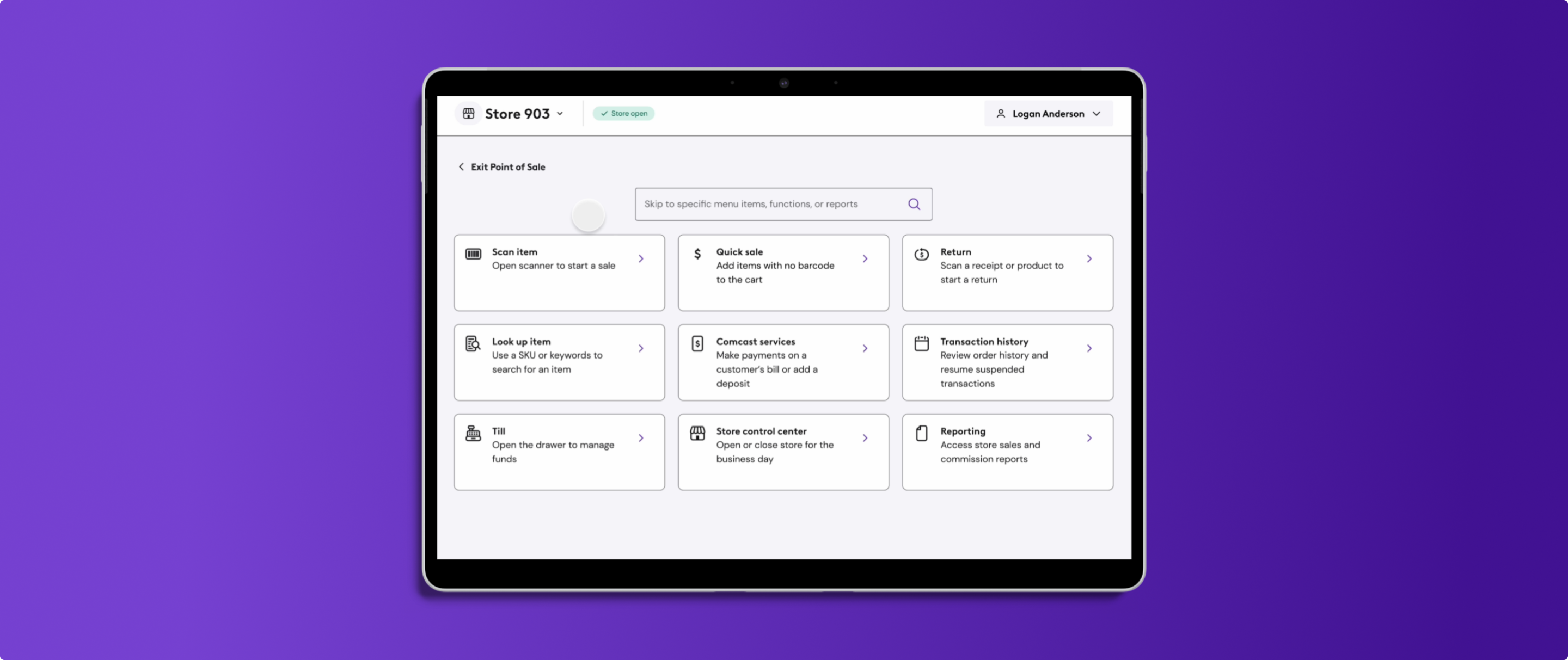
Comcast Point of Sale system on tablet
Client Comcast (Xfinity Retail)
Duration October 2024 – Present
My Role Design Lead (stepped up from Principal UX)
Team 2 UX designers, 1 PM, 1 PO, engineering partners
Deadline Design-ready by end of Q1 2025 (Oracle contract renewal in Nov 2025)
Key Deliverables End-to-end POS system design, IA, user flows, research-validated prototypes

The problem

Comcast's retail stores were running on XStore — a slow, buggy, outsourced Oracle POS system costing millions annually. The contract was up in November 2025, and the company needed to replace it entirely.

XStore's poor design made every transaction harder than it needed to be. Retail employees struggled with confusing workflows, redundant screens, and a system that had never been designed with them in mind. Comcast wanted to take full control of their in-store sales experience — but the project was already behind before it started. Business requirements were only 20% complete. And two weeks after I joined as a Principal UX Designer, the design manager left, creating a leadership vacuum at the worst possible moment.

The clock was already ticking. If Point of Sale wasn't design-ready by end of Q1 2025, the entire timeline to replace Oracle would be at risk.

Problem visualization
20% of business requirements complete when design began
2 wks into the project when the design manager departed
Nov '25 Oracle contract renewal deadline driving the timeline
Q1 '25 target for design-ready delivery

My role

I was brought onto Point of Sale as a Principal UX Designer — specifically because of my deep knowledge of the Celestial Design System, which the new POS would need to align with. Within two weeks, the design manager left unexpectedly. Rather than wait for a replacement, I stepped up, aligned with Frontline UX leadership, and formalized the interim Design Lead position.

From that point on, I owned the design process end to end — establishing sprint cadences, collaborating with the product owner to finalize incomplete requirements, structuring the roadmap, and leading the other designer through an extremely compressed delivery timeline. This project was a proving ground, and it directly led to my formal promotion to Design Lead at Think Company.

Stepping Into Leadership

Filled a sudden leadership vacuum two weeks into the project. Aligned with Frontline UX leadership to formalize the role and immediately established structure where there was none.

End-to-End Design

Partnered with another designer to build the entire POS experience from scratch — information architecture, user flows, wireframes, and high-fidelity visual design across every major workflow.

Sprint Structure

Implemented sprint-based cadences including planning, reviews, and structured handoffs. Maintained momentum and accountability across accelerated two-week cycles.

Stakeholder Alignment

Collaborated closely with the product owner to finalize the remaining 80% of business requirements while simultaneously designing and delivering against what was already defined.

The approach

Phase 1 — Weeks 1–2

Establishing leadership and structure

Stepped into the interim Design Lead role after the departure of the design manager. Implemented sprint-based meeting cadences and collaborated with the product owner to estimate a roadmap that aligned with the aggressive timeline. Turned chaos into a plan.

Phase 2 — Weeks 3–8

Designing the POS system from the ground up

Built the entire Point of Sale experience from scratch — using Celestial Design System components where applicable while ensuring POS functioned as an independent product. Created detailed information architecture, user flows, and wireframes, then iterated rapidly through high-fidelity visual design.

Phase 3 — Weeks 6–10

Integrating user research

Brought on a UX researcher to conduct in-depth interviews with Celestial designers and in-store retail agents. Validated design decisions against real-world workflows and incorporated research insights into iterative improvements — ensuring the system actually worked for the people who'd use it every day.

Phase 4 — Weeks 8–14

High-stakes, fast-paced delivery

Delivered major components of the IA and UX in accelerated two-week sprints. Maintained alignment with engineering teams to ensure seamless handoff and feasibility. Finished ahead of schedule, with all assets, documentation, and handoff materials finalized.

Designing with and beyond Celestial

Point of Sale needed to align with Comcast's Celestial Design System while standing on its own as an independent product.

My deep familiarity with Celestial — having spent months building and documenting its components — gave me a significant advantage. I knew which components could be used directly, which needed adaptation for POS-specific contexts, and where entirely new patterns were required. The goal wasn't just operational parity with XStore. Every workflow was an opportunity to vastly improve the experience — reducing clicks, simplifying navigation, and designing for the speed that retail transactions demand.

The result was a system that felt native to the Celestial ecosystem but was purpose-built for the unique constraints of in-store retail: quick interactions, minimal training time, and zero tolerance for friction at the register.

Celestial + POS component relationship

"We didn't just match XStore's functionality — we seized every opportunity to make the experience fundamentally better."

Research-driven validation

In a project moving this fast, we couldn't afford to guess. We brought in a UX researcher to validate our design decisions against real retail workflows.

The research strategy focused on two goals: finding areas for improvement and identifying remaining gaps. We conducted in-depth interviews with both Celestial designers and in-store agents to understand how intuitive the prototype felt, where confusion surfaced, and what real-world limitations we hadn't accounted for. We also explored POS analogs across the industry to benchmark against best practices.

The insights fed directly back into the design — refining workflows, simplifying interactions, and ensuring alignment with how retail employees actually work, not how we assumed they did.

Research goals

  • How intuitive do users find the prototype's interface and features?
  • What aspects do users find most valuable or helpful?
  • Which areas need further refinement?

Key findings

  • Core transaction flows tested well — faster than XStore baseline
  • Navigation patterns needed simplification for speed
  • Edge cases in account management workflows required additional states

Replacing XStore

XStore was the system every retail employee complained about but had no choice but to use. It was slow, visually dated, and full of unnecessary steps that turned simple transactions into frustrating multi-screen ordeals. For years, Comcast had been paying Oracle millions annually for a tool that actively worked against its employees.

Point of Sale wasn't just a redesign — it was a complete rethinking of how in-store transactions should work. Every flow was rebuilt to minimize clicks, reduce cognitive load, and get employees back to the customer faster. We designed for the reality of retail: standing at a counter, multitasking between systems, and helping customers who don't want to wait.

XStore (Before)

  • Slow, buggy third-party Oracle system
  • Confusing multi-screen workflows
  • No design system or visual consistency
  • Expensive annual licensing costs
  • No input from retail employees in the design

Point of Sale (After)

  • In-house system built on Celestial Design System
  • Streamlined flows designed for speed
  • Consistent, accessible UI across all workflows
  • Eliminates Oracle dependency and licensing costs
  • Research-validated with real in-store agents
POS interface showcase

Outcomes

Product impact

  • Delivered a fully designed POS system that exceeded XStore's functionality while vastly improving usability
  • Built on Celestial Design System foundations while functioning as an independent, standalone product
  • Research-validated with in-store agents and Celestial designers

Business impact

  • Kept Comcast on track to eliminate Oracle dependency, saving millions annually in licensing costs
  • Finished design delivery ahead of schedule despite starting with only 20% of requirements defined
  • De-risked the November 2025 contract deadline through structured, accelerated delivery

Leadership impact

  • Stepped into a leadership vacuum and formalized the Design Lead role within two weeks
  • Established structured sprint processes that improved communication across design, product, and engineering
  • This project directly led to my promotion to Design Lead at Think Company in January 2025

Process impact

  • Created a repeatable sprint-based design process for high-stakes, compressed timelines
  • Integrated user research into an aggressive delivery cadence without slowing momentum
  • Established clear handoff documentation and engineering alignment practices

What I learned

Point of Sale was one of the most high-stakes, fast-paced projects I've ever worked on. It pushed me into a leadership role I hadn't planned for, under conditions that didn't leave room for a learning curve. I had to set clear goals, build structure from nothing, and guide a team through tight deadlines without sacrificing quality — all while the requirements were still being written around us.

The biggest lesson was that leadership doesn't wait for a title. When the design manager left, the project didn't pause. Someone had to step up, and I did. That instinct — to fill the gap rather than wait for permission — is what turned a potential derailment into the project that earned my promotion.

It also reinforced something I've believed for a long time: deep system knowledge is a superpower. My months on Celestial meant I could design faster and with more confidence, because I wasn't learning the system while building on top of it. I was already fluent in it. That fluency made the aggressive timeline possible.

Continue reading

How this site was built

I'm going to say the quiet part out loud: AI built this website. And I'm proud of that.

Most people hide behind the fact that they use AI to create things. I want to flaunt it — because I think the way you use AI says more about you than whether you use it at all.

I've spent 16 years trying to deploy the portfolio website I always envisioned. I tried everything a non-coder could try — Webflow, Wix, Squarespace, literally just shipping a Figma prototype as my portfolio for the last few years. My most recent attempt had me deep in Framer, convinced I'd finally cracked it. Another unfinished project. The truth is, when you're working full time leading design teams, there's never enough time or energy left to also build and maintain your own site. The vision was always there. The bandwidth never was.

AI changed that equation entirely.

I designed every screen, every interaction, and every detail of this site in Figma — the same way I design everything. Then I used Claude Code to bring it to life, guiding it step by step through layout, styling, animation, and content. Every decision was mine. Every pixel was intentional. The AI was the tool that finally closed the gap between what I could envision and what I could ship.

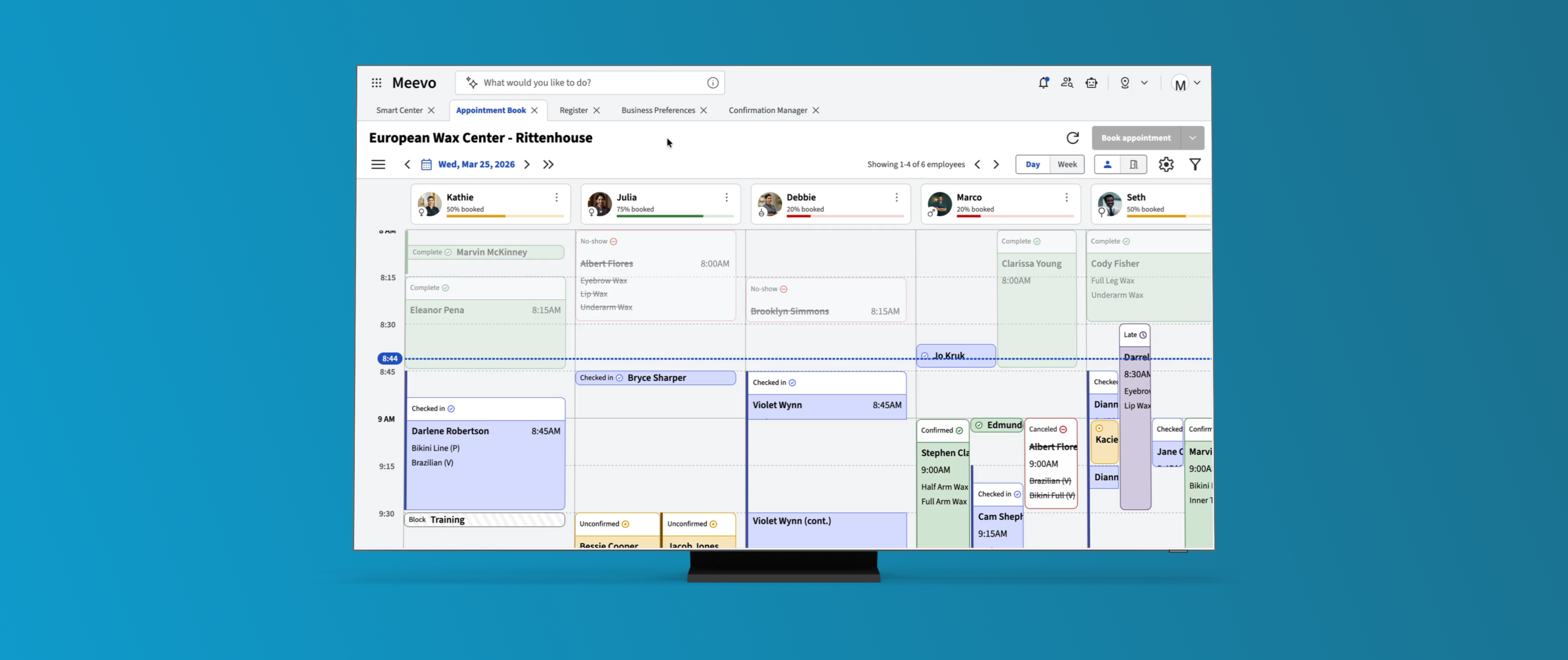
But the site itself is just one output. The real unlock came from the way I've been working on projects like Meevo — building an AI-assisted design operations framework around markdown files, GitHub repositories, and context systems that keep multiple AI agents working with the most comprehensive understanding of the project possible. Over 18 months of leading that engagement, I accumulated a massive amount of project data: strategy documents, design rationale, stakeholder feedback, research findings, system documentation, the works.

So when it came time to write the case studies on this site, I didn't start from scratch. I pointed AI at all of that structured context and used it to help me aggregate, synthesize, and draft the narratives you're reading here. Because why wouldn't I? The craft is in the curation, the framing, and the judgment. The AI handles the grunt work that used to make case studies the thing designers never finish.

The result is the thing you're looking at right now — a portfolio that actually represents who I am, built the way I believe design should work. Not despite AI, but because of it.